I think their determination is very commendable, but let's wait and see what happens.
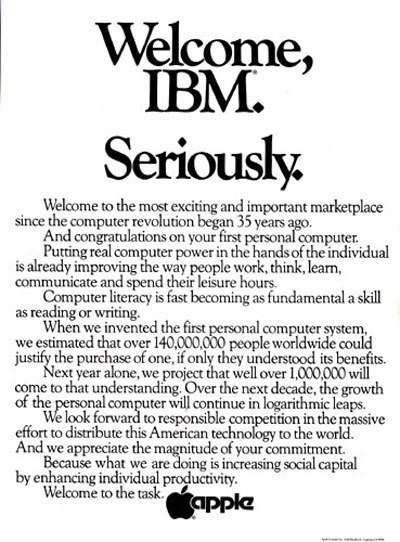
The important thing to note here is that Google is not just competing with them now, they've commoditized the service altogether. This means that people are going to be less likely to ever want to pay for voicemail transcription.
The real money is scaring TMobile et al that "This is the SMS of 2009. Your customers are going to leave your cell phone and start taking calls on Google Voice if you do not have this feature. That will cost you billions.
We have a solution. You can bill them $3 a month for it, added onto their bill. They will pay it because they value their relationship with you (hah) and they don't want to have to change phone numbers just to save $3 a month.
We'll license our technology to you for a cut of that $3 plus a piddling few million a year. If you double the cut and guarantee a minimum of $STUPID_MONEY per year, we'll even agree to avoid licensing this technology to any other American cell provider, for as long as you maintain a growth rate of STUPID_RATE%."
He makes an interesting point that Google hasn't been a category-killer, in anything but search. Perhaps the most dangerous thing about them is the fear they create in you, making you give up.
Did Google Video kill YouTube?
1. market win: YouTube's advantage there was mass adoption/network effects... which the article's SimulScribe doesn't seem to have yet.
2. tech win: I'm a bit leery of touting technological prowess, because through fast iteration anyone can catch up (especially if they have an example to work towards - tech history is full of these stories). The crucial exception is if the leading tech still isn't good enough. If that sounds counterintuitive, read it as "has room for improvement". Because as the new entrant catches up to where you were, you have moved ahead. The danger for you is if your product is already perfect - then you have no where to run!
The other way of protecting a tech advantage is through patents. The article doesn't mention patents, but perhaps that's because they create bad PR. People don't like patents. Some people hate patents. However, he's partnered with IBM, and he's talking about technical advantage in difficult field. If his tech really is that advanced, it's hard to believe he wouldn't have patents on it.
However, none of that matters, because he anticipates that the carriers' fear of google will drive them into his arms. He didn't say this, but an acquisition seems likely to me. If not by a carrier, then by google itself.
Very good article. If you are in a market and Google is not your competitor yet, read it so you know what to do and what to look for when they enter your market.
I commend your resolve to continue, but there is one fatal flaw in your argument: point 3.
Google has absolutely no intention of ever making money from their telecom products. In fact, Google considers them a cost of business. Why? Because they are trying to build the largest corpus of spoken text in the world. They are simply collecting data. The purpose of that data is to build the best text to speech algorithms in the world, so that they could then make it possible to search for audio. For example, imagine the power of being able to search for a spoken phrase in a youtube video.
So I don't ever expect them to shut down the services or charge for them. At least not until they have text to speech down pat.
Google muscling in is a good thing, it means theres money to be made there.
Why not say "Were simply going to kill google, they are way too big and way too slow. People will appreciate the extra depth of our offering and our nimbleness, along with our highly attuned personal service. We don't have a huge marketing budget, so people only use our product because its so damn good."
One can also gain traction by marketing the venture as a "David versus Goog^B^Bliath" battle - the public will empathize with the underdog.
I have an old GrandCentral account, and a large group of their original users were homeless people that got free accounts as a part of a grant (don't remember who paid).
seems like the guy is trying to find some potential point where all things go their way, where they might somehow attempt to compete with Google.
I just wish that companies would just admit that internet has such a giant population, that you can build and grow a business from that 30-40% that have no idea Google provides a competing service
This is a fantastic article... sometimes there is a lot of room in markets for competition. My favorite example is the Kayak.com example. They came into a space that had a lot of competition and have done a well enough job that they now are sitting quite pretty. Stay the course.
Really? Opposite response. Facing an existential threat to their business --- by his own admission, GV is practically 1:1 with them on features, free vs. paid, with his differentiator being "accuracy" --- what he's got is handwaving. "Other people have gone up against us with free" (paraphrase); yes, and those people didn't have the strongest brand on the Internet.
Gmail is free. People still pay for hosted email. If you get locked out of gmail or they lose all your email, who are you going to call? Would you host mission critical email that millions of dollars hinge on on gmail?
Even if that's addressed, in a huge market, a tiny market share can still be huge. Opera has somewhere around 1% (non-mobile) browser market share, and they still have millions of customers.
If there are 10M voice services customers, 1% is 100k. If you can charge $10-30 per customer per month (https://apps.simulscribe.com/signup/register), you've still got a $12-36M/year business. For VCs this may be a zombie, but it's still a great small business (a la 37signals).
From my experience, Google's customer support for it's paid Google Apps could use a ton of improvement,to the point where I think it is a significant weakness exploitable by companies with similar paid services and better support. They are really difficult to contact and their support navigation always frustratingly leads you to one of their help pages instead of a number or email address to use. And if the problem is not a service outage/emergency, you must go through email which takes days to get the typical generic and unhelpful response.
I love all of Google's services, but I am/was incredibly frustrated that we actually paid to use their services and then they left us out in the cold when it came to a shortcoming of their infrastructure. We started with a domain for Google Apps and purchased 6 accounts on the domain. A year or so into using their service, we realized we needed to switch our primary domain from ourhabit.com to habitindustries.com. Both the domains are owned by us, and habitindustries.com was at the time setup as an alias on our ourhabit.com domain. Turns out, Google Apps does not support the switch. And not only do they not support it, there is no migration help to move emails or remove the risk of losing email while you transfer over to the new primary domain. And the real kicker? They made us pay for all 6 accounts again on the new primary domain even though we would no longer would be using the old account. If you aren't going to support a basic feature (which is called for again and again and again on their forums), don't make us shell out another $50 per user to mitigate it. Thank god we only had 6 users at the time.
Sorry for the rant, but seeing the claim of 24/7 customer support really set me off :)
Simulscribe has an 800 number and support you can talk to. For firms where this is a mission critical service I think Simulscribe will remain a viable. Google doesn't have the strongest brand for services to business. I would think Fedex/Kinko, UPS, or Intuit (and even IBM) would be more highly respected by many of firms currently relying on Simulscribe/Phonetag.
I've never used either product, it does seem like an application where customers would be willing to pay to get better accuracy, especially business clients.
Obviously, Google might improve their solution and offer similar quality for free. It's definitely possible, but judging from their recent performance it's not as "game over" as it would seem in the days of Gmail and Google Maps.
its not even an issue of features. 99.99% of internet users have heard of google. my guess is 0.001% have heard of simulscribe. this doesn't mean simulscribe can't compete or doesn't have a kick-ass product, but users still have to be able to find them.
i suspect the best way for simulscribe to compete with google is to be folded into an entity that is well known, and has the marketing budget to remain in the minds of potential users


The important thing to note here is that Google is not just competing with them now, they've commoditized the service altogether. This means that people are going to be less likely to ever want to pay for voicemail transcription.