Interesting the author says “other manufacturers don’t bother”.
Unsurprisingly the real reason is “Apple was granted a patent on this over a decade ago and no one is risking an Apple patent infringement lawsuit over laptop speakers”.
EDIT: I say granted because that’s how most people understand patents and when they take effect. What really matters on the timeline here is the filing (priority) date and the grant (publish date).
It’s patents so it gets really complicated but essentially the later grant (after patent office/authority “review”) more or less makes the effective date the priority date - which to complicate matters even further can actually be the filing date of a referenced provisional patent that (in the US) can be as long as 12 months before the non-provisional (real) patent filing.
So is the thesis here that there is no other way to have non-crap sound on a laptop than this Apple patent? No alternative? No patent-non-infringing approach?
Because if not, the real reason is as the author suggests: other manufacturers don't bother.
I have been working a long time - decades - in a part of the industry that is not just patent happy but patent berserk and it has never been my experience that other approaches are not available when a single approach is patent-walled off.
But iTunes and the other big music distribution power players have requirements and use encoding technologies based on loudness rather than power. [1]
This is why your playlists don’t require adjusting the volume between songs from different artists/albums/eras/genres.
So it is likely that Apple’s method works hand in hand with the technical constraints of iTunes requirements and other streaming encodings.
And why the threat of Apple’s patent may be providing a moat. Like Dolby, except that licensing patents isn’t a core revenue stream for Apple.
[1] TFA doesn’t cut a bright line between power and loudness within its argument. But that’s a critical part of contemporary audio engineering in today’s commercial music production.
How many people are using their macs to listen to iTunes? I get YouTube, Netflix, anything you can watch on chrome, but iTunes is more of a phone, home pod, Apple car thing, and even then many people use Spotify rather than iMusic. Are other providers using QuickTime or similar encodings for non-Apple provided media?
All the streaming services normalize music on loudness.
That’s why you aren’t constantly adjusting the volume of your speakers/headphones to compensate for the way each song was originally mixed and mastered.
Power engineers have been doing this for decades (a century?); estimating the temperature of a transformer or motor from a simple ODE to see if the relays need to trip. The parameters are derived from the electrical parameters of the transformer.
I'm not arguing the merits of this patent (see my other comments). I'm attempting to provide some background on how this messed up system "functions".
That said, this process is not "estimating" anything. It's taking high resolution direct measurements[0] of driver temperature with awareness of the frequency and amplitude of the audio signal (also factoring in crossover frequency) and doing a bunch of stuff (this is well outside my area of expertise) to essentially overpower the individual driver(s) well past their intended electrical and physical specifications.
If I ever ended up on a jury for this (I wouldn't - I would get dismissed after one question in voir dire) even I would have a tough time associating (and recognizing as prior art) what you described with this process.
[0] - I've since been corrected on this - it is an estimation (of sorts).
The "bunch of stuff" is precisely the part where estimation comes in. There is no direct temperature sensor to measure from, the only thing available is the voltage levels on the speaker. As the patent says it's a 2 level estimate: estimate of impedance from voltages -> estimate of temperature from modelling the speaker's physical parametrs as a function of the driving signal and impedance estimate.
With patents it's not the general idea that's being patented. The patent itself cites many earlier patents which operate around the same general idea just with slightly different implementations on how the control process is fed and how it reacts.
It also cites another patent (https://patents.google.com/patent/US20120020488A1/en) which implements control of a speaker via combination of impedance measurements of the speaker while it's being driven + a baseline ("binding") measurement of impedance + ambient temperature that is taken at device power up - ie generating a per device calibration curve.
From quickly staring at these, the Apple patents threads the needle by:
* Implementing speaker control using the output of a temperature model (which is fed by the resistance measurement), instead of "directly" operating on speaker resistance.
* Not implementing per-speaker calibration.
(Note! There are other cited patents that I didn't look at, this wasn't meant to be exhaustive, just illustrative... and just to generally satisfy an itch)
Appreciate the clarification - like I said this is well outside my area of expertise and my eyes glazed over pretty quickly in reading but at this point we're borderline in semantics.
Exactly. In this case it's a "process". Generally speaking my take is there's almost never entirely new process (or design or anything else) in any "invention" - humans have been at this for hundreds of years and there's almost nothing that's entirely new.
I don't think I've ever seen a filing without tons of references.
I suppose the non-semantics point of everyone in this chain is: there is nothing about this patent from Apple that explains why using a dynamic temperature/power limit model for the speakers is uncommon in laptops. They are neither the first nor last to get a patent to do this, why then should it be the "real" reason most laptops don't?
See my other comments about patents in practice. They don't matter until you end up in front of a jury (or settle with a troll, which is a different case). A jury comprised of 12 random people off the street, specifically selected by counsel to be as ignorant as possible on the subject matter at hand (easier to influence).
My original point - this isn't enough of a distinguishing feature to drive sales and revenue for any manufacturer to risk that.
Ok, you sold 1% more laptops because you have good speakers. Then Apple sues you and potentially wins damages on a larger percentage of ALL of your sales of that "infringing" product.
Not worth it, not even close. Not even worth it to try to circumvent and still risk getting sued.
I doubt e.g. Dell, HP, Lenovo, and others have been shipping >100 million laptops per year longer than this patent has been around with most, if not all, without the feature primarily because Apple was one of many (and not the last) to file a patent on their implementation of a common feature in the sound industry and they are now afraid of and upreprade for legal battles related to making laptops. More likely few just care about crappy laptop speaker sound enough to write a driver modeling each device and speaker combination for a significantly wider variety of shipping hardware. But I suppose it's impossible to know without asking every manufacturer.
They don't care because it doesn't impact sales enough to care. If some R&D person in these orgs took interest in this it would get smacked down by PMs, execs, etc because it doesn't matter and they don't care. That's all well before it even gets to legal where this patent would be discovered. With these factors compounded it doesn't happen - and Apple has a tiny edge on what is probably their core market/demographic anyway.
Hmm I don't think we're saying the same thing at all. I'm not saying patents are part of the reason companies don't care, I'm saying they didn't care before the patent and there is no reason to suspect the patent is the real reason they don't care since. If any part of the reasoning for why not has to do with the patent being there then it's not what I'm saying, even if it would sound similar.
Patents do matter, you can get a patent knocked out at several phases in litigation prior to actually arriving at a trial. That's not even assuming the defendant goes and gets a stay to IPR the patent.
I agree, but in this case the only innovation I see is applying a known solution to protect large inductor coils (transformers, motors) to protect smaller, inductor coils (speaker drivers).
Apple can patent their actual model all they want (for example by adding the driven air as a cooling term), but the idea, generally, of building a model to estimate the temperature is prior art.
Speaker engineers have been doing this for decades too. Not necessarily by the specific method chosen by Apple (didn't read the patent), or with laptop speakers, but dynamic control of signals to achieve greater loudness within a specific power rating has been a thing for a long time AFAIK. Here's an example:
> "Nobody else does it because Apple patented it" - except non-Apple phones do do it. I'm pretty sure Apple didn't invent this, even if they got a patent. Apple have a lot of BS patents.
In that discussion the author references that Apple only starting implementing this circa 2014/2016 - which happens to line up perfectly with when the patent was working it's way through the USPTO and granted. Generally speaking you can get early confidence on whether or not the patent is likely to be granted. Lexis Nexus and others actually offer specialized services to IP firms where they have the background and historical performance (office actions, grant rates, etc) of the random patent reviewer human at the USPTO that was assigned to review your application.
This data, in conjunction with any early "office actions" sent by your reviewer, can give you a really good idea of whether or not the patent will be issued pretty early on in the process.
It's a classic risk vs reward calculation. Basically "does this impact/benefit the user experience and therefore marketability and potential sales enough to justify potentially 'going to the mat' in court if they call us out on it". Where "going to the mat" is absurdly expensive patent litigation up to and including building an outdoor ice skating rink[0] (in TEXAS) to potentially influence jurors in Marshall, TX (a 22k person town which happens to be home of the Federal Eastern District of Texas - a court known to be very friendly to patent infringement suits, AKA a "rocket docket"[1]). Not only is the litigation and associated stunts like ice skating rinks expensive, if you lose there can be significant damages - like in the Apple vs Samsung case where Samsung lost and was ordered to pay over $1B in damages. Then you get to decide if you want to keep paying legal fees to appeal, etc. It's called the Apple/Samsung patent war because this stretched on for at least seven years - likely to the tune of 10s of millions or even 100s of millions of dollars in legal expenses. Then, when/if you lose, you're usually ordered to also pay the legal expenses of the other party.
Apple vs Samsung was largely over key UI/UX components that are more or less standards for what users expect from a modern device. Samsung had to essentially calculate "do we try to work around these patents (and maybe get sued anyway) or offer a product in the marketplace that is markedly sub-standard vs a competitor product".
Somewhat paradoxically, at the "startup scale" when I've dealt with patent prosecution (filing patents - terminology is kind of backwards) I've been specifically instructed by IP counsel not to do in-depth patent searches for existing/competing patents. If it can be proven you knowingly infringed on a patent the damages increase significantly because it can then be considered "willful infringement". Good IP counsel often offers a service that (essentially) puts up a little bit of a firewall between the "inventor" and this issue - the firm does searches you're not privy to and usually channels some information to you while not disclosing specifics of the patent. This communication has the benefit of being protected by attorney-client privilege which is almost impossible to pierce.
For something like this I doubt many consumers are making a purchasing decision solely on what laptop speakers sound like. Most people don't really care, sure, it's a "nice to have" for your laptop speakers to sound better but from a sales and revenue standpoint the difference is likely minuscule.
Samsung and notch are maybe copies
Apple's ridiculous design (and some functional software) patents that they reasonably believed would never hold up in court.
This is another excellent point. The standard (traced back to Thomas Jefferson and in The Constitution) is that patents are intended to be granted on "inventions" that are "novel and non-obvious"[0]. Obviously, as shown in cases like this, that's highly subjective and as I've been educated, this all comes down to a jury (with the games of jury selection and all) - a bunch of random people off the street with no background or understanding of any of this - and that's just how the attorneys want it.
In modern times "To promote the Progress of Science and useful Arts"[1] usually ends up having the opposite effect. Literally in The Constitution (a document from 1787) - Article I, Section 8, Clause 8.
> Unsurprisingly the real reason is “Apple was granted a patent on this over a decade ago and no one is risking an Apple patent infringement lawsuit over laptop speakers”.
It is not exclusive. I cannot believe that there is only one way of doing something like this. They just need to care enough to put some R&D money into this.
Sure, but as I've noted elsewhere if it goes to court it ends up in the hands of a jury. Let's just say that 12 random jurors off the street aren't exactly the HN crowd. In fact, I doubt a single HN user would ever make it on a jury for anything technical unless they lied or deliberately mislead counsel during juror questioning.
"Juror number 7, what is your occupation?"
"I'm a software developer..."
"We move to dismiss this juror".
In this case it could probably be argued for cause due to prejudice which means they can do it all day.
A big part of the calculus here is banking on that.
Are parents disputes decided by a jury in the US? I know we have a different system in Germany and don't have juries to begin with, but patent disputes are generally handled by specific courts here and, given how specific and technical these cases can be, I wouldn't trust twelve random people to decide them.
Out of curiosity, why would they not want to select someone who's a subject-matter expert? Is it regulatory capture or is there a more innocent reason?
People with expert knowledge on the jury bring additional information into the jury room that isn't presented in the court proceedings.
...
Years ago, when I was on the jury for a OWI case one of the questions to the jury was "do you speak Spanish." I don't, I answered "no." I don't speak and haven't studied any languages derived from Spanish.
Part of the case was about a defendant from Puerto Rico who wasn't responding to an officer who was a native Spanish speaker claiming that he couldn't understand that dialect. Note that this wasn't relevant to the case - it was trying to explain why the defendant wasn't responding to the officer.
The question of Spanish didn't come up in jury deliberations.
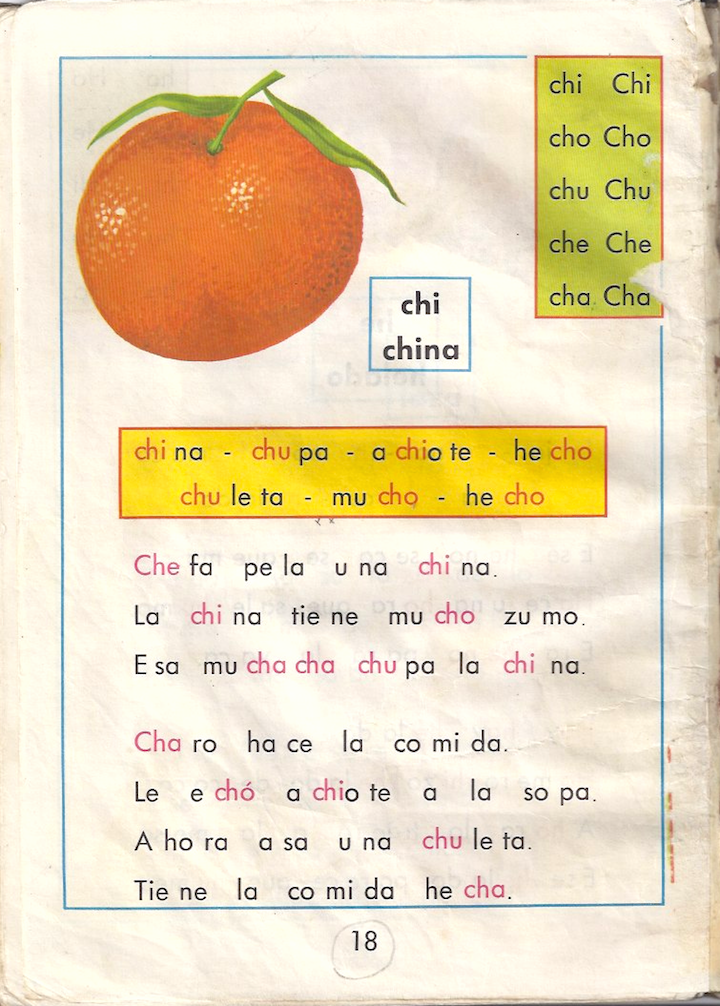
After the case, I noted that while I didn't speak Spanish, I did understand French and could read ancient latin and greek... and took linguistics... and my mother was fluent in Spanish and understood several dialects (and used that fluency in a professional capacity) including Puerto Rican (where she had lived for several years). The differences between the PR Spanish and Mexican Spanish are things like the word for the fruit "orange" is a "china" ( http://speakinglatino.com//wp-content/uploads/2012/09/Cartil... )... but we're getting to things like is it a water fountain? or drinking fountain? No - it's a bubbler ( https://www.reddit.com/r/MapPorn/comments/9010e8/what_do_you... ).
This got a scowl from the public defender because I had beyond common knowledge that that line of questions of the officer about if he spoke PR Spanish was trying to catch him in something that he could come back to later (which he didn't).
If the case had been decided on that he didn't understand the instructions of a different dialect (rather than he couldn't stand up, slurred his speech and had a strong oder of malt on his breath (note this was another bit that the public defender tried to bring into question as the officer said he smelled of alcohol which doesn't have a smell itself) my understanding of linguistics and language may have been grounds for disqualification and a mistrial.
---
Subject matter expert evidence should be presented - not something that someone has more than a layman's understanding of being brought into the jury room (as that could also be wrong).
Exactly. Attorneys from each side generally want to control the narrative/merits of their case as much as possible. When you're a subject matter expect juror they already have one juror who is less susceptible to their argument. When that SME gets in the jury deliberation room and is free to (essentially) present whatever they want/think/know with no monitoring, countering, argument, etc that's a "very bad thing" in the eyes of the attorneys. I have to imagine jurors are also much more likely to trust a fellow juror at face value than the attorneys and expert witness testimony that has an obvious slant to their side. A big part of their case usually comes down to "who's expert does the jury trust more".
Interesting with your "bubbler map" - in my childhood I moved from "outside the green in that map" to "inside the green in that map". Dialects are fascinating - the first time I heard bubbler to refer to a water/drinking fountain I had no idea what they were talking about. However, the inverse wasn't true - I said water/drinking fountain and they knew exactly what I was talking about.


https://patents.google.com/patent/US20130329898
EDIT: I say granted because that’s how most people understand patents and when they take effect. What really matters on the timeline here is the filing (priority) date and the grant (publish date).
It’s patents so it gets really complicated but essentially the later grant (after patent office/authority “review”) more or less makes the effective date the priority date - which to complicate matters even further can actually be the filing date of a referenced provisional patent that (in the US) can be as long as 12 months before the non-provisional (real) patent filing.
Clear as mud, right?