The secret to persist with commuting on the bike is to remove friction as much as possible.
Lots of greats suggestions here. I would add a few more points. For me the biggest thing making me pick my car in the morning was thinking "But what if I want to...." Over time I chipped away at the "what ifs" by figuring out how to secure my bike, where I could get coffee before work and a beer after, where to pick up groceries on the way home, and how I could freshen up at work if I needed to. So:
- Keep a stash of wet wipes (the big ones made for camping), deodorant, and a fresh shirt at work in case you have an unexpectedly hot day or an unexpected 9am meeting with a client.
- Learn how to secure your bike, and always carry your lock(s). Then you'll always be able to grab some groceries or have a drink with someone after work.
- Get familiar with the amenities that matter to you on or close to your route. If you're a coffee fiend and run out of coffee in the morning, you'll want to make a detour.
- Buy a bigger bag than you strictly need. Riding with a half-empty bag in the morning is the only way you have the freedom to buy groceries or dinner on the way home.
The secret to persist with commuting on the bike is to remove friction as much as possible.
That was certainly the secret for me. I kept track of every obstacle, and eliminated them one by one, so that there was no need to even decide in the morning.
I set aside a place in my house for all of my cycling , so I don't have to look for it. I check the weather when I get up, so I can grab the gear that I need for the day. I hauled a bunch of spare stuff to work, mostly worn out gear that I didn't need at home any more, including rain jacket and pants. I frequently check the condition of my bike, so there are no surprises during my ride. And so forth.
For me some of the frictions were self imposed. Take off the bike computer, don't turn on strava, etc and getting up and going is a lot simpler. Another key was adding a small poach to the front of the bike, just big enough to fit a phone, wallet and keys so I didn't have to pack anything before leaving the house.
I have a Garmin 520, I don't actively upload to Strava, it syncs beautifully.
When I start the ride, it sends a text and email to my wife with tracking information so she can see where I am. I also train during the commutes so I look at my power numbers all the time.
I absolutely love it when I see people with no computer on the bike, I am too weak to give it up
Seems more equivalent to plugging in an EV every day. I wear clothes every day so putting on a pair of bike shorts and packing my work pants us a minor inconvenience.
I pump the bike tires once a week and that takes less than a minute, including the time to get the bike pump.
The water bottle takes a few seconds to fill.
A bike computer seems like a luxury, if you don't want to deal with charging it, don't use it.
In the summer, my bike commute prep is only a few minutes... Longer in the winter since I need more bike specific clothing
For me, it's mainly the winter. I only own one item each of the things I need, and I need all of the stuff to survive when it's below zero.
It's also not really a problem any more since I'm well over the hump of getting into the habit. It's more that I tend to misplace things in general. ;-(
I pump up the entire family fleet every Saturday. No computer, no water bottle. Part of the deal was figuring out what stuff I can confidently leave behind. As an extreme example, I can live with the possibility of getting a flat tire during the summer, since I'm never more than two miles from work or home.
I'm not saying it's long, but it's a lot of steps that I don't want to deal with in the morning. Prepping everything the night before makes it so I don't forget anything.
For example, my first weeks in the new company I kept forgetting my entry card, now I put it in the same place every day as I arrive home, didn't forget it in months.
I find it strange to give this advice, then provide 3 alternate example routes that add a mile or more of climb to the ride. Gravity isn't friction, per se, but it does pack a wallop all the same, especially if sweat or fatigue (or injury) is a concern.
Are these roads safer or prettier or something that I'm missing from the map?
Note the author isn't just a commuter, but a somewhat serious competitive cyclist. For cyclists, fighting against gravity is fun, or at least feels rewarding; fighting against friction or wind is not. I don't know exactly why - both simply require more effort - but everyone would agree.
1. Don't use a blinking light (front or rear) as your sole light. A blinking light is bad for driver depth perception, they'll be able to see that you're there somewhere, but it will be hard for them to localize exactly where you are and how far away you are - use at least one steady light.
2. At night, more lumens is not always better. You may think that when it comes to lights, brighter is better, but you really don't need that 1000+ lumen light in the front or that "Can be seen for 5 miles" eye searing taillight for most road riding.
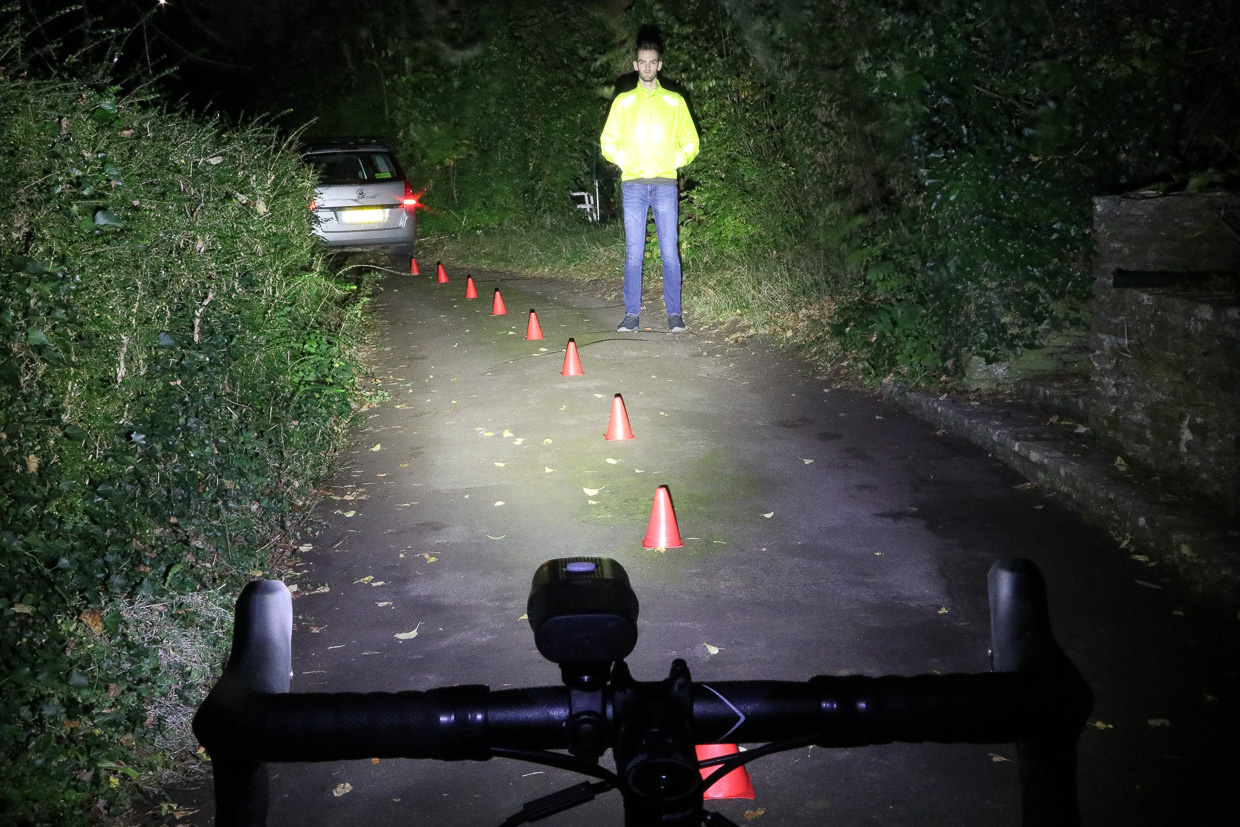
Most bike lights have terrible beam patterns -- sending as much light above the road and into driver's eyes as they do down at the road where you need it. So while you may be able to see, you're blinding everyone else. And because this pattern lights up the road just in front of you more than farther away, you're making it harder to see people and objects farther away.
I highly recommend an StVZO approved (German bike regulation) head light -- it will have a beam pattern with a sharp cutoff so you can illuminate the road without blinding other riders and drivers. Busch and Muller makes some great lights with this beam pattern.
In the daytime, however, feel free to go with bright and flashing.
> I highly recommend an StVZO approved (German bike regulation) head light
While I find the idea behind StVZO sound, if you only shop StVZO approved lights you are at a stroke eliminating a lot of extremely good quality lights at pretty much all price points. Even among really high-end bike light brands (Exposure etc), often only a limited subset of their range has received this certification.
Much of the issues with blinding other riders and drivers can be mitigated almost entirely by setting the light at a sensible angle on your handlebars, if it even is an issue for the light you have.
> Most bike lights have terrible beam patterns
This really isn't true of good lights from reputable companies, and hasn't been for a while. A no-name bikelight from Amazon for 5 bucks might differ.
> but you really don't need that 1000+ lumen light in the front or that "Can be seen for 5 miles" eye searing taillight for most road riding.
This entirely depends on one's needs, but if you cycle anywhere that has zero street lighting, such as backroads at night, 800-1000 lumen lights are the _dimmest_ I would consider. Especially on a roadbike at ~20MPH, you absolutely need that level of brightness in pitch black to ride with similar confidence to daytime. For in city use, I absolutely agree though. There is a difference between lights for being seen by others, and lights that allow you to see in pitch black environments.
If you are struggling to pick a light, I really like the road.cc light comparison tool, which allows you to compare the actual beams.
Look at the beam from the ~150UKP Cateye or Niterider (not cheap lights), see how the man standing ~10m away is perfectly lit up, bright as day? That means he's got the full beam in his eyes. As would an incoming cyclist or motorist
Compare to the B&M IXON series beam, see how even 45 meters away, the beam cutoff is so sharp that someone standing down there would have their head above the beam cutoff.
The main LED points backwards on those lights so not only do they have better control over beam pattern, but there's no incidental light coming direct from the LED -- the entire beam leaving the light is shaped by the reflector.
The man In question is wearing a high visibility reflective jacket almost directly in front of the bike, it’s little surprise the vast majority of bike lights will cause this to illuminate.
I still think this is a much more effective tool to pick a bike light than a still relatively niche German regulation. It’s not perfect either, but it’s the least worst approach I’ve seen.
The point of buying a StVZO light is not that it meets some arbitrary regulation, it's that such lights are certified to have a sharp beam cutoff that can be aimed to avoid unnecessary glare in oncoming cyclist eyes.
I have an addition to your great points here re #2. There have been numerous times, as an automobile driver, I'll be approaching a cyclist at night with a bright light, and it's so blindingly bright in the darkness it actually makes it hard to precisely see them. Almost like someone taking a pic in your face at night with a flash, or walking from a very bright room outside where it's dark. It takes your eyes longer to recover and see the surroundings clearly again. The closer you get to them, the harder it is to "see" them, which is very dangerous. The same is also true for some modern car headlights that are so bright it almost looks like they are driving with their highbeams on.
Good point, that happens with bright tail lights too -- many times I've been approaching someone on the bike path with a super bright tail light, and it's really hard to tell exactly how close I am to them as I approach. And it's completely impossible to see if anyone is coming the other way so it's hard to pass.
Mostly good tips for someone considering cycle commuting, but I'm disappointed in the "Dress for the Occasion" section. It's easy to ride in jeans and a t-shirt, there is no need for special bike clothes. I've seen this as a barrier to entry so many times in the U.S. Just check out a city like Copenhagen and count how many cyclist are wearing full kit (almost none).
There is some extra comfort in wearing bike specific clothing on longer rides, but don't let that prevent you from getting started.
Totally agree, as an avid cyclist and commuter in SF. Check his commute, 60mi/6,000ft days are fun, and a hell of a workout! ;) Definitely he's wearing a kit for a reason!
I'm somewhere in the middle ground - usually I just shower in the morning and change the T-shirt (I always carry one and have an extra stock at work...). My colleagues swear I cause no olfactory discomfort and that they would tell me if I did (and that's crucial as there is a social taboo about this, and it's harder to feel one's own smell).
I commute every day and I commute in the clothes I wear to work. In the summer, that means shorts and a T-shirt (yay informal tech dress codes).
I don't wear jeans though; I was going through too many of them. I've switched to Prana Brion pants. They look like typical slacks but are stretchier and more robust, and they're comfier than jeans in everyday situations.
Agreed, but jeans are really unattractive at the distances the author is riding. His circumstances are unfortunate, since the set of advice applicable to <5 mile rides is very different to his ~20mile trip.
Related, I'm very impressed by his speed. I ride about 9 miles to and from work and it takes me ~35-40 minutes door to door.
I actually think I am very fortunate TBH. I usually do the 30mi route through Portolla Valley in 1:30-1:45. During the summer it is the perfect commute.
If i go the direct route during rush hours I am faster with the bike than any other means of transport.
Honestly, I am surprised not more people do it. With electric bike now, yiu can be flying. Even at my best effort, i can only keep up with the ebikes for a couple of minutes
To be fair, his ride is 20 miles, wearing jeans 40 miles a day would be very sweaty, and they'll only last a few months before the seat is too worn and they rip.
I ride 2 miles each way, so wearing bike clothes is unnecessary.
The whole no shower aspect isn't practical if you're riding for an hour plus and climbing like OP does. There's no way to avoid showing up a sweaty mess and baby wipes just won't cut it.
Does anyone have recommendations for bike pants that aren't cycling pants? I only have a ~25 minute ride to work that's pretty simple and urban, but I've ruined several pairs of pants with even mundane, simple cycling. I don't want to buy a bike jersey and spandex... so pants that I could also wear at work would be a welcome recommendation!
Nearby gym or swimming pool membership is one option. I used this strategy in university. If you creatively bribe the staff you may even get in free.
I don't do spandex. I like heavy cargo shorts and have several loose fitting pairs in bright red camo for a personal (anti-)fashion statement ... err ... I mean safety and visibility. :)
Agreed about showering. I'm lucky to have been born with weird genes, so I sweat very little. For this reason, my advice doesn't tend to be too helpful.
One thing I do is to leave in the morning before the sun has cleared the trees and houses, so it's still relatively cool except on the absolutely hottest days in Wisconsin. And I slow down, and ride with an upright posture, which may help with air flow.
I wear synthetic hiking pants from REI or similar. They have held up quite well to daily bike commuting, about 4 miles each way on relatively flat terrain.
Winter is another matter. ;-)
What's happening to your pants? Maybe baggy shorts over your regular pants would protect them. Lots of people also wear mountain biking garb, which tends to be somewhat less form-fitting. If you're wearing holes in your butt, maybe your saddle is too high.
At least five of my work colleagues have gotten e-bikes.
In fact I'm going to be ordering 1-2 more pairs so I can have them all in rotation when one gets dirty. One caveat is that there is some pilling happening in the crotch area after repeated use.
Club Ride has men's pants too you could check out.
> There's no way to avoid showing up a sweaty mess and baby wipes just won't cut it.
This is true, but you can definitely minimize the effect: showering right before I ride makes a huge difference, and ditching the bag/wearing a synthetic wickable shirt (Under Armour's are good, IME) makes 20 miles daily in NYC bearable for me. Deodorant and changing are, of course, essential.
> Does anyone have recommendations for bike pants that aren't cycling pants?
I have a few pairs of Chrome pants and shorts[1]; they're cycling oriented, but are passable as normal casual wear.
In the bay area, it's still possible to ride to work for a significant distance without a shower.
I used to have a 12 mile commute that took nearly an hour - It's almost always cool in the morning, and I'd ride slow for the last mile or so to minimize sweating, then change into my regular clothes at the office. No shower or wipedown required. On the way home I'd typically just wear my regular clothes.
I don't know how you're ruining your pants, but if it's bike grease or getting your pant legs sucked into the chain, a simple ankle strap will let you avoid that. By using a drive wax lube (I use White Lightning, but there are others), that also minimizes the dirt transfer if your pant leg does brush against the chain or chainring.
Mostly holes in the inseams. I basically wear jeans at work everyday, so something similar to that look is what I'm aiming for. It'd be awesome to not have to change when I get to work since the facilities aren't so great.
Wear fully covering gloves no matter what. Even in summer.
Because if you have a bad accident they can keep your hands safe.
I was knocked off my bike a few years back. Car pulled out at a junction in front of me.
I went head first into the car but put my hands out to cushion the blow.
Anyway, after the impact, i took my gloves off and the tip of one finger was hanging off. The impact had opened my fingertip and cracked the bone.
The paramedics who came to treated me told me the gloves had probably saved my hand and finger. They'd lessened the severity of the impact of my hand into the car.
The paramedics also told me the gloves had stopped the open wound getting filled the dirt and debris.
I had to have an operation to clean the wound and re-attach my fingertip. The surgeon said the process was much simpler because the wound was fairly clean due to me wearing gloves. And the risk of infection and complication should be less too due to the wound being cleaner. The finger healed without any problems (although I do have some scarring on it to this day).
If you're unlucky enough to have a biking accident you will instinctively put your hands out to shield your head and body. Make sure your hand are covered fully as it might save them.
I'll never ever ride a bike without them no matter what. Even if my hands are sweating buckets due to the summer heat. It's not worth the risk.
I've bike-commuted in LA and London, various Chinese cities, and Sydney and cycle toured in many more countries. I would say skip the bike computer - it just adds theft interest and provides little info a cellphone can't give you ahead of time or after, which is safer than reducing focus on the road. Also I would say figure out what you enjoy and get it in to your routine, for me it is uphill. Right now I don't have to commute because I put my family home and our new office in the same development, but I cycle up the nearby mountain most mornings anyway! This feeds in to the major selling point not mentioned: if you exercise, your brain is super awake and you are more effective at work! Another point I would make is that cycling is very time efficient and does not require synchronization with others, two very strong points for busy entrepreneurs. Finally, be the envy of your buddies and stay late at the bar to get all the girls: just chuck your bike in the back of a cab and you are suddenly not only the healthy work-hard-party-hard but also the sensitive responsible new age guy. Note: does not work for people who are worried about paint chips and scratches. Worked for me, YMMV :)
I biked for many years in Boston, MA, and the advice to assume that everyone is out to kill you rings true. I've ridden along and between cars, trucks and buses always assuming they can't see me, and never had any accidents. However, what got me multiple times over time is doors opening suddenly on stopped cars (the last time on a car in a traffic lane idling at a red light, opened by an exiting passenger). So if you're riding in those conditions I think you should assume they are out to get you by suddenly opening doors :-)
It puts a big damper on bike commuting because it means you need to move very slowly along rows of parked cars, as well as stopped traffic.
Indeed I've been doored and have had numerous close calls. What got me the first time was a false sense of security from the bike lane painted right alongside street-side parking spaces. With roads that narrow, people may actually be safer without bike lanes, so that they could occupy the entire traffic lane instead.
THE most dangerous places are driveways, exits, acceleration lanes. This is where you should assume the person in the car next to you is actively trying to kill you.
When I ride (and it doesn't happen a lot) in a street that has a row of parked cars, I take the full lane and I will never ever put myself in the range or a door. I know too many people that have been doored and crashed really hard.
People reversing (to me) basically go "Here I go, I don't care who's behind me".
At the end of the day, it doesn't matter how many things and tips you do right, the biggest challenge to cycling are cars and general poor road infrastructure in US cities.
Daily Manhattan bike commuter here. You can commute on any bike that rides, but what I find helpful are: Gears, disc brakes, fenders, a rack, pannier, lights, and suitable clothing for cold or rainy weather. My bike came with gears and disc brakes; everything else I've added.
Despite my commute being mostly flat, gears are still quite useful in getting started from the frequent stops on my commute. Disc brakes work better than older alternatives and are especially better in rain. Being able to stop quickly when you need to is very important. Everything else should be explanatory.
I personally wouldn't get any use out of a bike computer or phone handlebar mount. Seems like an unnecessary complication and annoyance.
Do you have any recommendations for breathable rain gear? I basically can't use my rain gear unless its below 40 degrees, because I'll be drenched in sweat. I'd rather just change into dry clothes when I get there.
I also second the fenders, if you live somewhere that isn't California, you need fenders if you're going to ride. A seatpost mounted fender is better than nothing, but full coverage fenders with a mudflap will keep your shoes and face dry.
As a regular commuter and recreational cyclist in the South Bay, I have to say how impressed I am that he occasionally cycles to work going up route 9. That's a serious climb that takes you up a couple thousand feet over 6ish miles.
One of the reasons I love commuting by bike in this part of the country is how flat my route is. I ride in normal gym shorts during the week, but I always break out my bike shorts for a climb like that. I don't think they're necessary in the majority of bike commuting circumstances.
Bicycle commuting is awesome; just remember that vehicle drivers do insane things. Do not assume that a green light by itself means it’s safe to cross. Drivers do insane things. After a while, you get a sixth sense of who is going to do what. You go over things in your head a thousand times that will one day save your life. Like, if that truck pulls out in front of you, do you bounce off his broadside and try to roll out of oncoming traffic, or do you cut right and try to get behind his rear wheel instead of underneath it. A few days ago I was waiting to cross a street and two cars blew through a red light at the same time, one of them turned left, and the other car smashed them head on and sent the car spinning right over to where I had been standing. I got out of the way, ditched the bike, and started pulling people out of the cars, fully expecting an explosion or something gruesome inside. Nothing left of the front end of either car, but airbags are a darn miracle. The worst either of them will have to deal with is a few dollars higher premiums. Moral hazard. Watch out.
I'm a year-round bike commuter in Montreal, which many assume is impossible. There's a great community of cyclists here [1] who post info about ice/snow conditions, road closures, etc.
Some tips I'll add for the winter commuters:
1. Get a face mask/balaclava - ideally one you can raise and lower as your face gets hot and then cold again
2. Get really good gloves. Your bike will be COLD to grip.
3. Wear leggings under your clothes. I commute all winter in just jeans/leggings, but my roommate adds a splash guard too. My jeans aren't as clean as his
4. Layers that you can zip/button. You'd be surprised how hot and sweaty you can get while riding in the winter
5. Grease any parts on your bike that you don't want to seize -- this includes all nuts/bolts on the brakes and derailleurs, the cables where they enter the housing, the brake/shift levers themselves...
6. Ideally you have at least somewhere indoors that you can clean your bike well every so often (a location where it's ok to track tons of grimy snow). If not, still clean it/re-lube pretty much weekly
7. Practice slipping/drifting -- this advice follows for anyone who drives in the winter too. you should know how to handle a vehicle when you lose traction
8. Learn to plan your routes. Some streets will be more clear of snow than others. Some bike paths close in the winter. You need to know all of this
9. Know when to walk your bike. I still bring my bike most days, even snowy days! I just walk the bits that I can't ride
My tip: check all routes options from the standpoint of a pedestrian rather than a vehicle.
I used to bike from Sunnyvale to Menlo once or twice a week. My boss at the time tipped me off to some pedestrian-bike bridges that made for great off-peak, quiet routes through neighborhoods.
Specific local tips:
There are bike bridges over creeks and major roads alike (e.g. over 280 in Cupertino, over 237 near the Shoreline trail, and from San Antonio Road into Palo Alto (behind Sprouts)).
A long stretch of Bryant Street in Palo Alto is a dedicated bike route, blocked off from auto through-traffic every few blocks.
The only major hassle to cross at street level was Embarcadero.
I always brought extra work clothes the day before and always showered upon arrival at work.
Regarding being seen - even if you are lit up like a christmas tree, you should assume no-one can see you, and have an escape plan.
Also, a major gripe I've got in the past couple of years is cyclist with super-bright, epilepsy-inducing flashing lights (which are great for on-road use) who ride with said lights at full-blast on off-road shared (pedestrian+bicycle) paths, thus blinding any oncoming cyclists or pedestrians. Car headlines have regulations to prevent them blinding oncoming traffic, but bicycles do not, and the lights have gotten _much_ cheaper and brighter in the past few years. Pity that consideration of other people isn't such a thing...
Any tips/sites for biking in certain areas/cities? I just bought a bike to commute in Boston, but part of me is terrified (I got hit by a car in the suburbs a good 10 years ago). For example, my route is from South Boston to Charlestown and there are definitely some hefty roads to cross to get from point A to point B...and it would be great to know if other people ride a route like that and what roads they take/recommend.
I bike-commute year-round in Oregon, which isn't as bad as it sounds. I used to ride a road bike with thin (25) tires but I wiped out (at low speed) early last year and broke my hip!
Now I have a touring bike with disc brakes and wider tires, definitely a good investment. Road bike stays in the garage for weekend rides when it's dry.
I love doing the same route every time. You just get into that zone, and then all of a sudden you're home or at work. Been doing it for 7 years straight, and though I've moved homes and work a few times, necessitating a route change, I've never been bored.
Doing the same route every day didn't work for me, that "automatic" riding is not appealing at all.
If I feel I need to "wash off" a hard day, there's nothing like a hard ride through the mountains to get you home calm and ready to spend time with your family
Just want to reiterate this: a small backpack doesn't seems like it would be problematic, but being free of it really feels like being free. Also, you don't need expensive saddlebags, a bike rack and basket is fine.


The secret to persist with commuting on the bike is to remove friction as much as possible.
Lots of greats suggestions here. I would add a few more points. For me the biggest thing making me pick my car in the morning was thinking "But what if I want to...." Over time I chipped away at the "what ifs" by figuring out how to secure my bike, where I could get coffee before work and a beer after, where to pick up groceries on the way home, and how I could freshen up at work if I needed to. So:
- Keep a stash of wet wipes (the big ones made for camping), deodorant, and a fresh shirt at work in case you have an unexpectedly hot day or an unexpected 9am meeting with a client. - Learn how to secure your bike, and always carry your lock(s). Then you'll always be able to grab some groceries or have a drink with someone after work. - Get familiar with the amenities that matter to you on or close to your route. If you're a coffee fiend and run out of coffee in the morning, you'll want to make a detour. - Buy a bigger bag than you strictly need. Riding with a half-empty bag in the morning is the only way you have the freedom to buy groceries or dinner on the way home.