The pressure differential, in essence, is created by a faster airflow over the airflow. As the total pressure in your flow stays constant, if you increase the local dynamic pressure (with a faster flow), the local static (measurable) pressure decreases.
So if you manage to shape your airfoil so that one surface experiences a faster flow (on average) than the other, you can create a pressure difference, and therefore lift.
And in effect it is true that the gas will most probably need to be turned and displaced, but that is really the airflow adapting locally to the obstacle (airfoil) it encounters. The nose of the airfoil, where the acceleration is high, can be a place where a lot of lift is created, but it is not necessarily so.
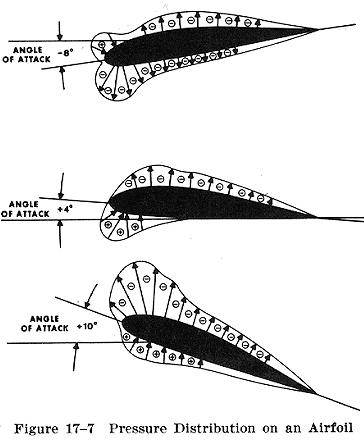
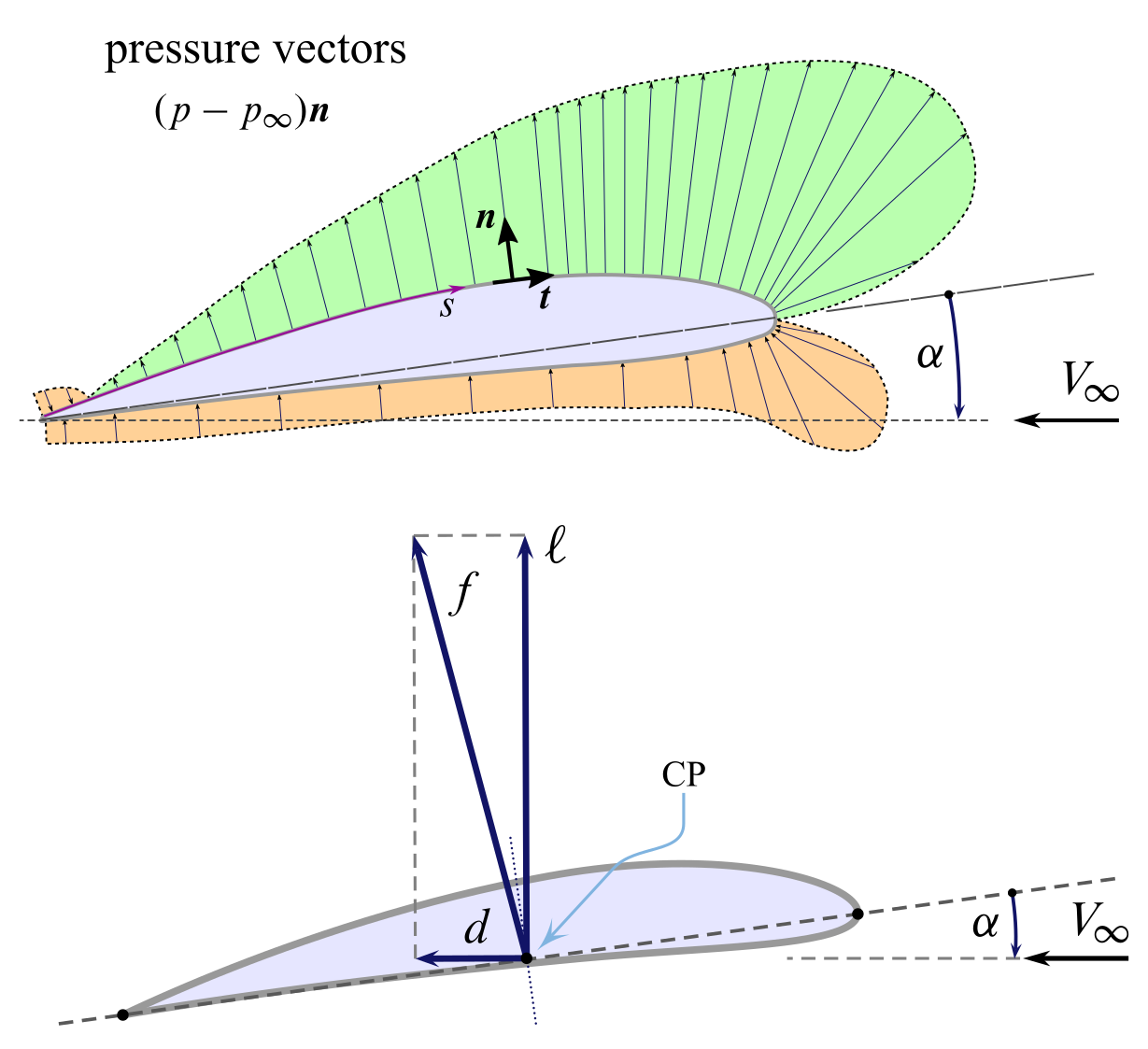
You can see example pressure distribution plots below:
It's not a cause and effect situation, because you can't have one without the other. A pressure differential can only exist if the flow is altered somehow, because a pressure differential means that the air molecules are subject to a net force which accelerates them. This is really just Bernoulli's theorem, which is Newton's second law. However, it doesn't tell you anything about why the flow around a wing arranges itself into such a configuration.