I think image signing support (or at least was) is not as good as it can be. It would be nice if more images were signed by publishers and verification performed by default.
Even then, that only gives you a stronger indication that the image hasn't been altered since it was signed by the image author at any point after it being signed. However it is not a guarantee that the source produced the binary content. It's also not a guarantee that the image author knew what they were signing - though this is a different issue.
Debian has a reproducible builds initiative[1] so people can compile packages themselves and them match byte for byte what Debian built. Not sure how far they've got with that.
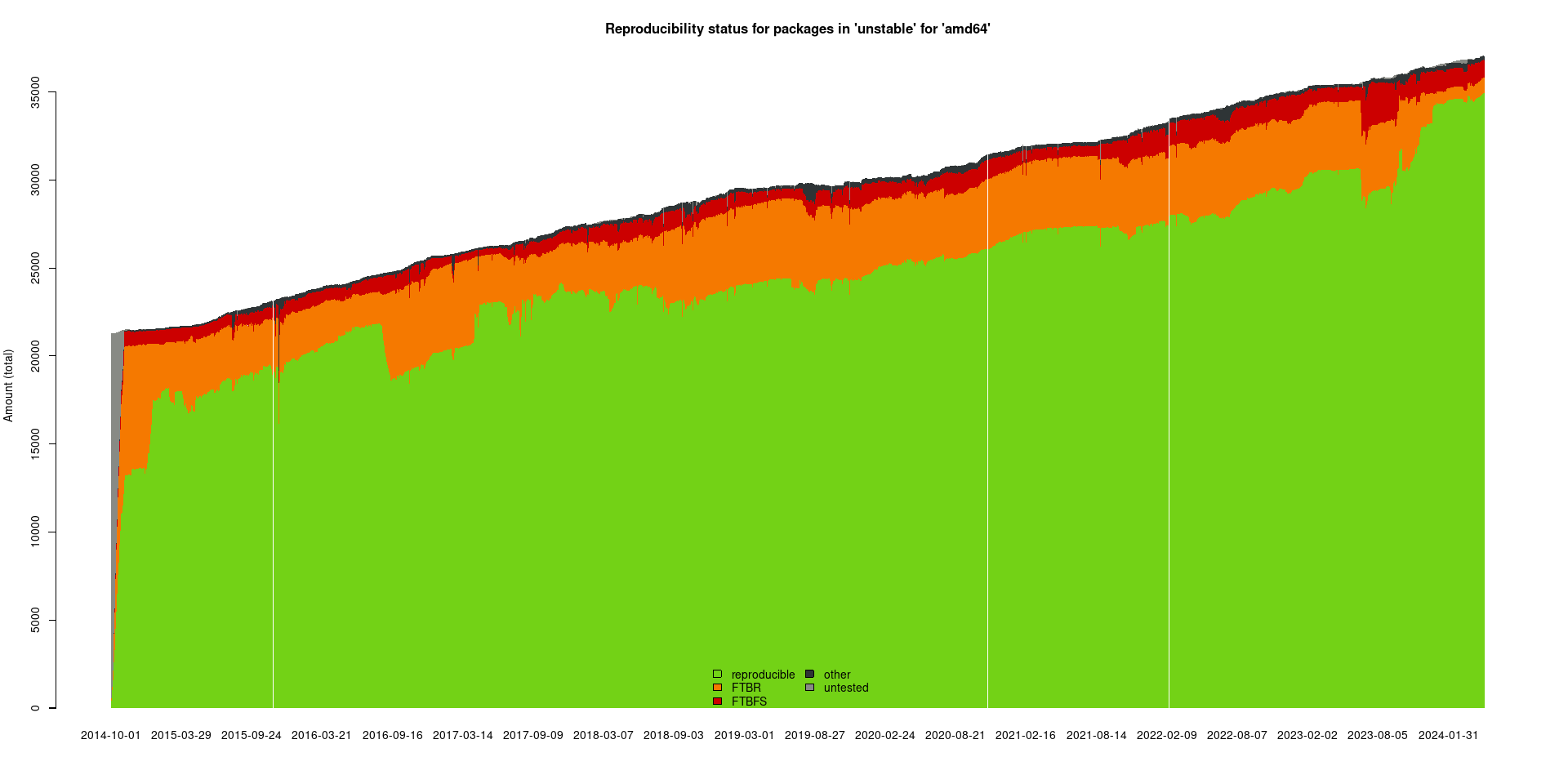
Approximately 25,000 of just over 30,000 source packages are now reproducible builds - generating over 80,000 binary packages. See the graphic on the page you linked to:
You can enable client enforcement of Docker Content Trust [1] so that all images pulled via tag must be signed. Whether people are actually signing their images is a different question that I don't know the answer to.


Even then, that only gives you a stronger indication that the image hasn't been altered since it was signed by the image author at any point after it being signed. However it is not a guarantee that the source produced the binary content. It's also not a guarantee that the image author knew what they were signing - though this is a different issue.
Debian has a reproducible builds initiative[1] so people can compile packages themselves and them match byte for byte what Debian built. Not sure how far they've got with that.
https://wiki.debian.org/ReproducibleBuilds