Evolution is a good analogy, since you are making the same mistake regarding both evolution and optimization/growth.
These things don't have an inherent direction, they are aimed in a direction. The point being made here is about the direction they are being aimed, not stopping them.
I don't think anyone's advocating that, they're advocating sustainability (not static-ness(?) I'm sure there's a much better word here) over endless growth, there's a pretty distinct difference.
When you put money into blackjack you're not buying an asset. A crypto coin is an asset that can be held. Just like a share of a company, or a dollar itself.
yes but it's a bad analogy because the odds are known and if you don't win the lotto the ticket is worth nothing. all bitcoins are equally valuable ( fungibility ).
But all cryptocurrencies are not equally valuable, and there's no reason to think that all of any given crypto won't eventually equally be worth (arbitrarily close to) $0.
I can imagine a lottery where usually nobody wins anything but every now and then everyone who bought a ticket wins collectively. It's still a lottery.
With stocks, for example, I can make a prediction about a company's future performance, buy or short accordingly, and expect that if I am correct I will profit.
I may be wrong about my prediction, but if I am correct then I've got far better than chance odds of also being correct about the future price of the asset.
Without making any further predictions about the state of the world I can equally easily imagine the price of Bitcoin in 5 years being $100 or $100,000. Neither price feels "wrong" the way it would if, say, Google's stock price rose or dropped by an order of magnitude without the company changing anything.
A bitcoin is as real as anything else. It's ones and zeros stored in a distributed ledger on computers around the world. I'm sorry you're having trouble predicting the price, look up supply and demand. Either way it doesn't make it any less real.
I don't dispute that a Bitcoin is a real, discrete thing. What I'm arguing is that it's a self-contained thing. The price of a Bitcoin is not anchored to anything outside the Bitcoin ecosystem.
With other assets, there's a clear causal arrow leading from outside the system back in. If Google the company performs better, Google the stock will overwhelmingly tend to perform better. If Google the company folds, Google the stock will overwhelmingly tend toward being worthless. The asset is a proxy for something that isn't the asset.
Bitcoin doesn't appear to work the same way. There's no obvious not-Bitcoin that demand for Bitcoin is a function of. It's a proxy for itself, after a fashion. That doesn't mean it has no value, but it does feel uncomfortably self-referential when compared to almost any traditional asset class.
Crypto's value is derived from its usefulness as a currency. It has many advantages over current fiat systems. You can expect if it's practical adoption expands then it's value will go up.
Company has assets that can be liquidated. Even if people decide a company has no value there's still assets that can be liquidated to provide capital back to shareholders. If people decide a crypto is worthless, its worthless.
Wooo this is awesome! Robinhood gets it :) I already use Robinhood for trading, so this would be a one stop shop. Plus the fact that it integrates with TurboTax means there's zero work to pay taxes on trades. Keeping track of the taxes is my biggest hassle trading crypto.
I wonder at this point whether the causality isn't reversed. I.e. it's not LabVIEW that's popular because visual programming works for engineering; it's engineers doing visual programming because LabVIEW is the industry-standard fad, stuck in the self-reinforcing loop of universities teaching it because companies use it, and companies using it because potential candidates all know it.
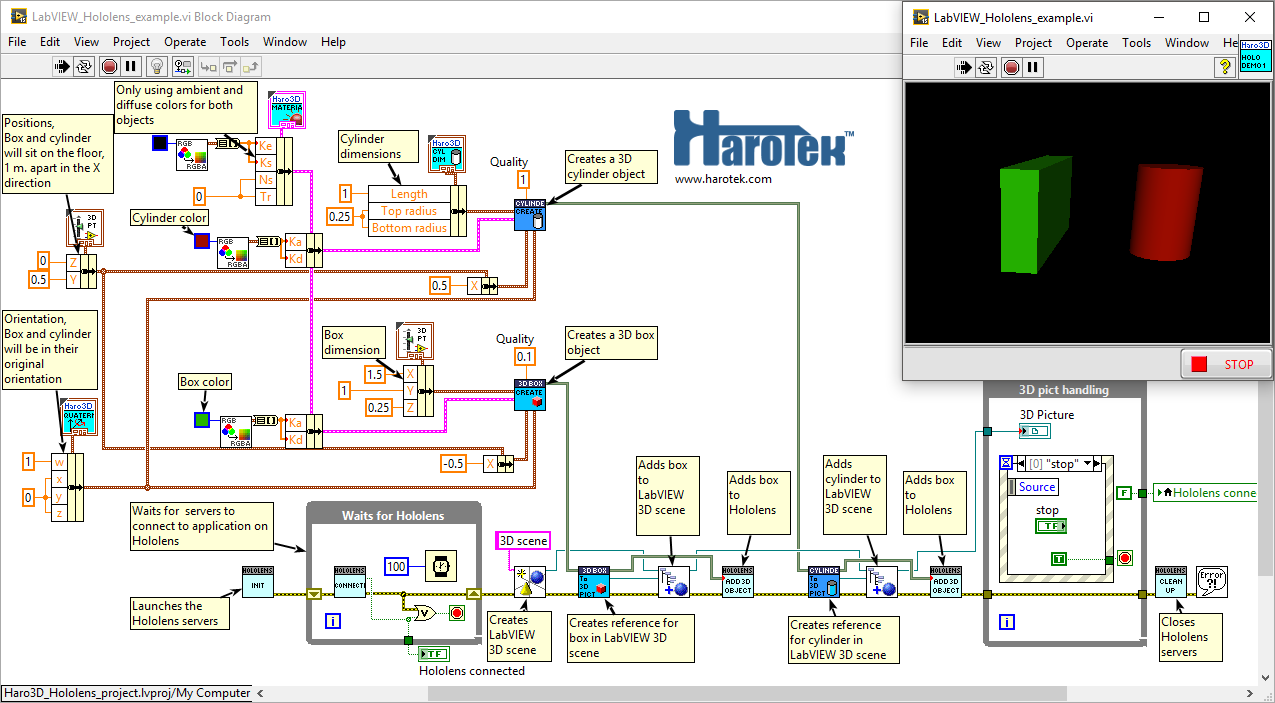
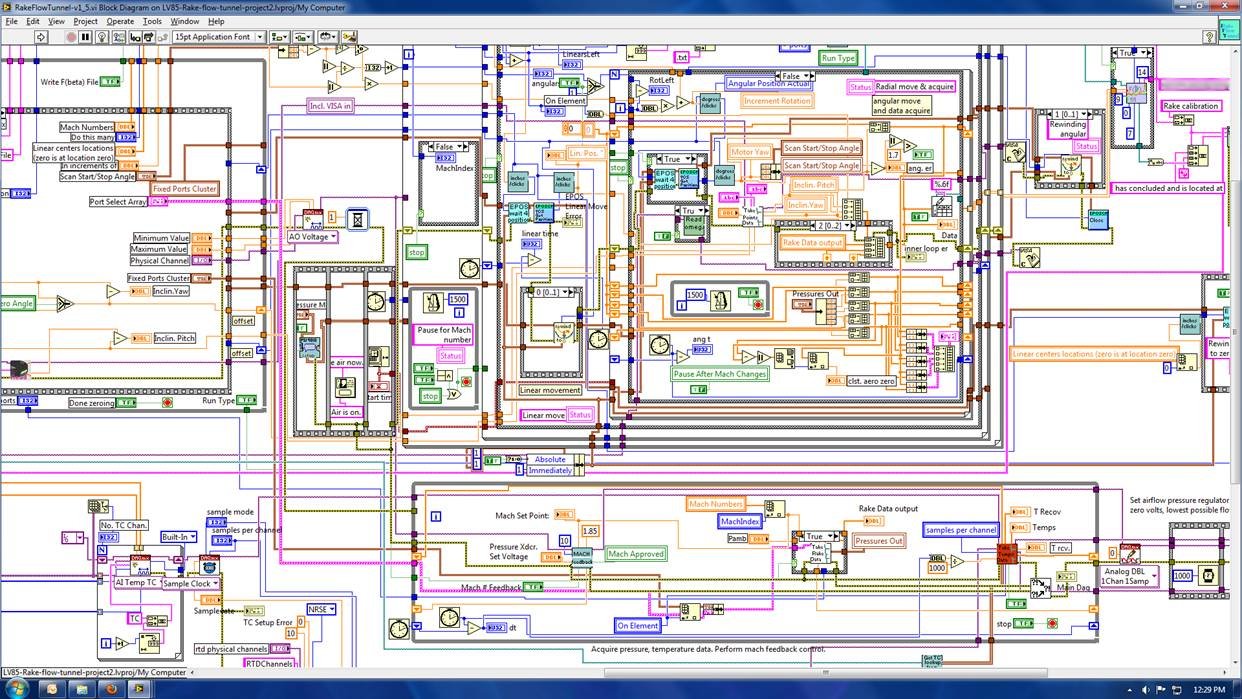
As a software architect (current title, but I had a technical education, "electrical/mechanical", incl. technical drawing, lab work, metal work, decades ago, before studying CS), who prefers text most of the time I still can see the appeal of something like this (All links lead to pictures):
Even this is not any worse than a complex text-based software project, you can zoom to the part that you want to look at in detail, just like you navigate between modules/classes/code files:
Also beneficial for a visual approach is that that is how electrical circuits are visualized. It's been a long time, maybe they describe more electrical circuits in text (I know VHDL but that is not for all kinds of circuits, nor does it concentrate on the electrical aspects), AFAIK it's still mostly diagrams.
Another point is that unlike software, where you deal with abstract things in any case (even registers, if you program in assembler, are pretty abstract). What you design in LabView is made of actual physical components, and you really physically run wires from one to the next.
What is shown as an enclosing box with "gates" between inside and outside as in this diagram really looks like this, LabView is a simulation of a physical system:
I have done quite a few courses (edX, Coursera) over the last few years, and when there were LabView portions I had no difficulty and actually found it quite appealing. I would not say the same for software, where I still prefer text.
For Go and/or C# lambda support would it be worth even running the garbage collector, or just allocating a block of memory and cleaning it up when the function ends?
Side note I think that should be an option for web servers as well for languages with managed memory. Light isolated non-threaded api endpoints shouldn't be interrupted by garbage collection.
We do this during request execution in our Ruby services. We tell the GC to pre-allocate a few GBs of memory, and then explicitly suspend GC until the end of the request. Then we do a single GC run.
Absolutely. It's a critical part of our runtime configuration, but we're hardly the first people to think of this approach.
I remember reading some discussion in an HN thread about FinTech developers who run Java with 100GB+ heaps and no garbage collector, and then reboot the application after the markets close. I can't find that specific thread, but I did find this which has a few nuggets on the same subject: https://news.ycombinator.com/item?id=6131786
While that does happen sometimes, from where I've worked at it is more common to write in a garbage-less style (basically not allocating or pooling everything) since JIT time matters at startup, especially for certain classes of strategies.
Ive seen applications run and never GC after initial startup until they get bounced to update. Another problem with the big heap is that you still have tlab issues if you keep allocating.
There is a new-ish poc collector called the null collector that literally does nothing, not even instrumentation, i believe, of write barriers.
We always see idiomatic programs benched against each other but I'd really like to see high performance pure java against high performance pure go and others. Some of the low latency Java tricks we use I'm not sure if they can even be copied in other hll (not including c/c++).
Generally an interesting idea, but Lambda containers are re-used across requests, so might not be a good thing to do in this case. If there's no reuse, and they figure out sub millisecond cold start, they could do this and essentially create a disposable server for each request.
This is an interesting question. I think it depends on the situation, You pay for memory so if you are getting near the cap in the execution of your function then managing the memory as you go may be beneficial but otherwise I don't see why you wouldn't just ignore it. I do have an open question weather the memory leak would effect subsequent runs of the function after it has been "warmed up" - https://serverless.com/blog/keep-your-lambdas-warm/.
Which one of these properties of cryptocurrency is imaginary?
  Coins cant be faked or duplicated
  No one can create them at will
  They can be transmitted quickly/globally with low fees (excluding bitcoin of course)
  You can store them yourself, no bank needed
  Sending huge sums of money is no problem
  Relatively simple design, 8 page white paper
  Has worked as designed for almost a decade
Seems like crypto has a lot unique intrinsic value that surpasses traditional currencies to date.
The only thing imaginary is your imagination. Crypto is very real. Even people on an island would eventually find a common denominator in which to store value which has many of the same properties above.
Yeah ripple is a token not a currency they can generate new ripple at will but since the founder has a large stake he has an incentive to not flood the market. But ripple is not the future it's a stopgap running on centralized servers it's not revolutionary like etherium
You’ve missed the point a bit which is why you are getting down voted. Much of our non physical world (money, value etc) are abstractions for something else and therefore the abstraction only has value in humanity’s collective imagination. If you try to give a goat farmer in the desert a bit coin he won’t take it as to him it literally has no value as he likely can’t access the internet or work out how to turn it in to something else. If we ALL collectively decided tomorrow that bit coins have no value (or the US dollar even) then it would loose its value. Much of our non physical world only stands up because we all agree it does, enough people change their minds and it all falls down.
You make it sound like 'anything' could be a currency. When in reality finding a common medium of exchange is extremely difficult, and must meet a lot of the properties I listed above. In terms of 'currency technology' crypto is a huge advance over our current standard currencies.
Anything can be a currency so long as enough people agree there is value. Bristol (a smallish city in the UK) has it's own currency that can be used locally that is accepted by shop keepers etc. You can't pay your mortgage with it but you can buy you apples with it.
We could use shiny stones as currency if enough people agreed it had value.
I think you are thinking about currency within the confines of the current system (eg government, laws etc). What I am saying is that government and laws are only valid in our collective imaginations and therefore everything is imaginary and made up (the USD is just as imaginary as bitcoin, it's just that more people believe in the USD so it is mainstream) and we can collectively apply value to anything want to and remove value from anything we want to.
'if people agreed it had value' - That is a big if, don't trivialize it. The value of a currency is dependent on a ton of the properties I listed above.
It's not even the same thing as normal fiat currency. It's a commodity whose value is predicated upon its shininess, rarity and ease of transfer.
It's basically gold if arbitrary bits of gold could be sent via email.
Bitcoin probably wouldn't have taken off at all if the financial markets were quite so desperate for new toys to speculate with. Bitcoin is the bastard step-child of low interest rates.
It's massively exposed to the threat of financial regulation, too. If the US government suddenly decided that it was going to assume bitcoin transfers are the result of money laundering until proven otherwise and that it's a consumer product that you have to pay sales tax on, its value would plummet to embarrassing depths.
I said it before and say it again. These things you call cryptocurrencies can be anything you want but currencies. Who ever claims the contrary has no clue about how a currency works.
If you claim this is a highly speculative asset, then yeah, you are right. But if you really want to call this a currency, you have to convince a government to use it as an official currency. No central bank in this world will accept to use a currency that is out of its control, that can't depreciate or appreciate at will.
> But if you really want to call this a currency, you have to convince a government to use it as an official currency
Since when does a currency have to come from a government? People used representative money in forms of IOUs before those were formally issued by governments. Sure, we've moved to government-issued fiat since, because it solved a coordination problem (how do you ensure the value of money doesn't unpredictably change), but that's just one possible solution now.
Crypto is already being used as a currency. And governments have no ability to depreciate it. I don't know what will happen next, but that is the reality today.
What I do know is a lot of people find value in a currency that cannot be depreciated at will.
"worked as designed" can be said for every thing. Everything works as designed. Yet gets hacked/stolen/cracked/misused. Banks are working as designed. And so is the government. Just that the majority will dislike the design because they have no say in it.
> You can store them yourself, no bank needed
And then you can loose it yourself too. Remove all the safeguards which was built thru decades of learning and allow everyone to shoot themselves and everyone else in the foot.
Doesn't that defeat the purpose of having soft currency ? Hardware wallets sure can be stolen physically right ? Leaving that chuck of currency useless (if not transferred fraudulently)
Think of a hardware wallet as of a credit card. You will have some mechanism protecting it from being used when you're not next to it (password/pin); you will have some cold recovery option if you lose it (like a long passphrase stored in a safe deposit box).
But, like a credit card, the send/receive operations are performed on a secure, limited scope system (rather than an easily-compromised PC)
> Seems like crypto has a lot unique intrinsic value that surpasses traditional currencies to date.
Only if they are used as currency in the marketplace. If cryptocurrencies are only an investment point they are a bubble with little or no practical value. The only value is to other investors.
Personally, I find cryptocurrencies volatile and as such would not use them to purchase anything.
I pay my friends for drinks in crypto, they pay me (usually ltc, ether, or doge). It's quick and easy with a wallet on your phone like Jaxx. No venmo, no paypal, no bank account necessary. I use crypto to store and exchange value today. It will only get more popular as it becomes easier.
I encourage everyone to try it. Send $100 of crypto to a wallet on your phone and use it to pay people you owe for small stuff. It's fun and easy. It also gets your friends bootstrapped with crypto without needing to use coinbase or gemini or whatever.
Also wallets like Jaxx are deterministic, meaning you can use 12 unique words to recover your wallet anywhere - even if you lose your phone.
Yes, but people also use beer as a currency. Probably much more than they use cryptos as a currency. In this context, when talking about currency, we mean at the same scale as fiat currency. Else, the currency discussion is senseless.
There are also downsides of course too. But I think the reality is that the future will have both crypto currencies and fiat currencies. Both have advantages.
Mineable crypto is not fiat because it cannot be created or destroyed at will. That is what gives it value over a fiat currency. You don't have to worry about a central government devaluing it or inflating it artificially.
I see your point, you're tying "fiat" to the act of spontaneous creation at will rather than the lack of a backing commodity, but I don't agree that definition, and even if I did I'm not sure it's as cast-iron a distinction as you're implying.
You absolutely do have to worry about price manipulation... the only difference is that it's not specifically governments it's just the disproportionately wealthy. I don't see that as a worthwhile distinction.
Similarly you can destroy cryptocurrency (some at least), and it can be created. The fact that the creation rate is constrained by the prudence of an algorithm designer rather than constrained by the prudence of a central banker seems like another arbitrary distinction.
To me it feels like crypto proponents want a fancy economics term for othering conventional currencies, so the definition is being bent to fit.
History has shown us that relying 'prudence of a central banker' is a really bad idea. Eventually shit hits the fan and they go on a spree printing money. The huge advance crypto has brought us is a solution to this very problem.
> History has shown us that relying 'prudence of a central banker' is a really bad idea
Sorry, no. History shows no such thing.
Just because $BAD_THING sometimes happens under $APPROACH doesn't mean that any other approach would necessarily be an improvement.
> The huge advance crypto has brought us is a solution to this very problem.
Poverty is a problem. Disease is a problem. Quantitative easing is a tool. If you believe that QE is bad, you're free to push for laws passed that take away that tool from central bankers... but you'll have a hard time because it's a very powerful tool for guiding economies.
You may believe that governments can't be trusted with that sort of thing, but Friedman-style laissez faire economics isn't the big success story that many seem to think. The US has become less regulated since Reagan's inauguration and in that time has lost it's position as the world's prime economic superpower to China, a managed economy much closer to the Keynesian model.
You watch how China reacts to BTC. It'll encourage adoption everywhere except within its own borders. Why do you think that might be?
I respect fully disagree wit many of your statements. From my experience I've seen these kind of schemes comes and go:
* Coins can't be faked or duplicated - YET - If you get a bot net arguing other the same coin either someone is going to get the coin or the coin is going to get lost.
It kinda like the Captain Midnight and HBO. If you haven't heard about HBO and some other TV networks has launched a communication satellite and professed no one could take it over. Some guy said they were wrong but no one listen to him. Then HBO started raising fees. So the guy overrode their satellite with narrow, focused a pirate signal. Today that would be less then $1,000 of equipment he had for his business.
* No one can create them at will - Except the bank. Someone is issuing those coins to begin with. What is stopping them from 'printing more money?' After all coins are going to get lost over over time. You'll need to replace them. People are going to exchange their currency from X currency to Y currency. Then what happens when someone finds a huge missing wallet?
Both cases are going cause an inflation / deflation cycle. During the inflation cycle this will drive the value up to where no one but the richest people can afford to use it because transaction fees cost too much. The deflation cycle are ruin entire fortunes.
* They can be transmitted quickly/globally with low fees (excluding bitcoin of course) - Won't Ripple and other cryptocurrencies eventually succumb to the same issue over time? You can make shard server but then you're centralizing the network and you get back to where you started.
* You can store them yourself, no bank needed - True enough. Just don't lose that digital wallet.
* Sending huge sums of money is no problem - That getting harder in certain countries as regulations are cracking down. Plus you need access to a terminal. In some areas that's just not practical.
* Relatively simple design, 8 page white paper - but how many other white papers do you need to understand to understand those 8 pages.
* Has worked as designed for almost a decade - And the current banking systems have been working for thousand of years. Does that invalidate this statement?
You said that 'crypto has a lot unique intrinsic value that surpasses traditional currencies to date.' I see crypto more as tulips then anything else. In Holland this bulbs of those beautiful spring flowers. Anyone could grow and make more. They had a definite expiration period. Then someone said 'wait those are just flowers.' And Holland's economy fell apart almost overnight.
My issues with 'crypto' are:
* No real physical assets to back it up - Its just numbers and algorithms.
* Algorithms are broken over time - Just look at the history of SSL / TLS
* The issuing source can issue more 'units' at anytime - The single issuing source of hashes IS the central bank. This causes deflation and devalue the overall market.
* Inflationary / Deflationary Cycle - The currency will inflate until it gets so big that processing fees can't be paid.
* The rich get richer and the poor get poorer - You either buy the farming equipment right away or get the scraps from other people that joined the bandwagon.
* Corruption - Just look at the Coinbase 'alleged' insider trading
Tulips can be created by anyone with some dirt. Mineable crypto is super difficult to create yourself. Tulips are also hard to distinguish, difficult to transport, ephemeral.
Understand that and you'll understand why most of your arguments above are poor.
Different cryptos are not compatible with one another. And the value is each is determined by a myriad of intrinsic properties. At the moment I'd say LTC is the most attractive.





Go outside and yell out, "Hey world, I'm good! You can stop evolving now, thanks!"