It reminds me of De Chirico and Pittura Metafisica which was a small art movement in Italy just before WWI.
I think that the backrooms are a kind of reaction to the total corporatization of american life. Just like how Pittura Metafisica was a reaction to the futurists. The futurists were obsessed with machines and going fast, their art was full of movement and metallic forms and so on. De Chirico's was the exact opposite, these ancient Greek statues and buildings standing totally still in a weird autumn light, with meaningful things (statues, grand columns, and so on) placed into meaningless landscapes often with perspective or lighting that was purposefully not correct.
I don't really know too much about De Chirico's rationale for making paintings like this but I suspect it had to do with the industrialization and loss of the old ways of life that he experienced and the rapidly changing social attitude of the time. He took these grand imperial symbols and symbols of modernity and made them feel alienating and unsettling. Of course we know what happened historically as a result of the futurists.
So I think this could be what the backrooms are, a purposeful choice to see this totalizing corporatization of everything as opposite of what it is typically portrayed: it is lifeless, dead, meaningless, non-unique. It's taking a form that is treated a certain way in society (the artifacts of corporate america) and totally inverting it.
Has a lot in common with Vaporwave, I really like it. Not a huge fan of the horror part of it although I guess that's artistically relevant, but moreso this feeling of alienation, sadness, disconnection. It's lurking beneath the surface of our daily life. Think of what working at the Meta campus might look like (bright, cheerful, sunny, aesthetically pleasing) and then think of how the app which is created by that work actually makes people feel (alienated, disconnected, sad, enraged). That's the metaphor, it's the contradiction.
The goal of web hosting is to provide low latency wide availability to many users.
AI in this context has a very different goal as a tool for individual users.
You wouldn't say that hosting instances of Photoshop on servers and charging for usage is a long term viable business would you? Even if current consumer computers struggled to run Photoshop.
I don't see an issue with the comparison, I don't think it is meant to be a 1 to 1 or anything, just an illustration of how consumers are overwhelmingly lazy.
I'd take issue with the statement that it is for the paranoid, but I guess it might be a defense mechanism because of course i am interested in local models. If my new workflow is going to be dependent on 3 companies, I'd prefer if there is a light at the end of the tunnel that breaks us free.
I think this narrative is kinda trueish but I still dislike it because it masks the real problem. Those property rights and review processes don't actually get us any benefit, they just allow a small number of people to grift the state and blow up costs for no reason and frequently for self-enriching nefarious reasons. So it's not like there's an upside to our system. This narrative suggests "well, we don't have great trains but at least we're free, unlike the Chinese" which I think is a load of shit.
People do get railroaded in China, it's true. But people get railroaded here in the USA too, because they have to live next to a loud choking freeway that gives them cancer and alzheimers, instead of a clean train line. And it costs $300 for car payment insurance etc to get anywhere which is basically a tax. 3 children a day have to die in car crashes because our whole society has been captured by the automobile. And in any case, they built all these freeways by railroading immigrant and black communities all over the place anyway. We got the worst of all worlds. Honestly net I think it sucks more than chaiqian because at least under their system you can ride the fucking train.
And even aside from this, China has way more civil engineers than the USA does and those engineers have many large projects under their belts. I think they are also just way better at executing large projects on time and under budget. Their engineers simply are better than ours. They build bigger things faster and cheaper than we do full stop.
Every now and then when I'm reading something, the writer will use a turn of phrase, a specific word, a metaphor, etc, that is unusually clever, or allows me to see the concept in some obtuse light. Or even, they are just able to choose the right words to make something sound musical or rhythmic in some pleasant way. It's intellectually delightful to come across these in writing.
I've never been surprised at AI writing. Emotion the biggest part of communication and these grey boxes have none.
"I understand that the officer killed your unarmed teen son. But you have to understand, in the dark, he appeared to be reaching for a weapon, and the officer feared for his life."
"It's a tragedy that she was raped. But you have to understand, the way she was dressed, she clearly wanted it, she was sending mixed signals, you see."
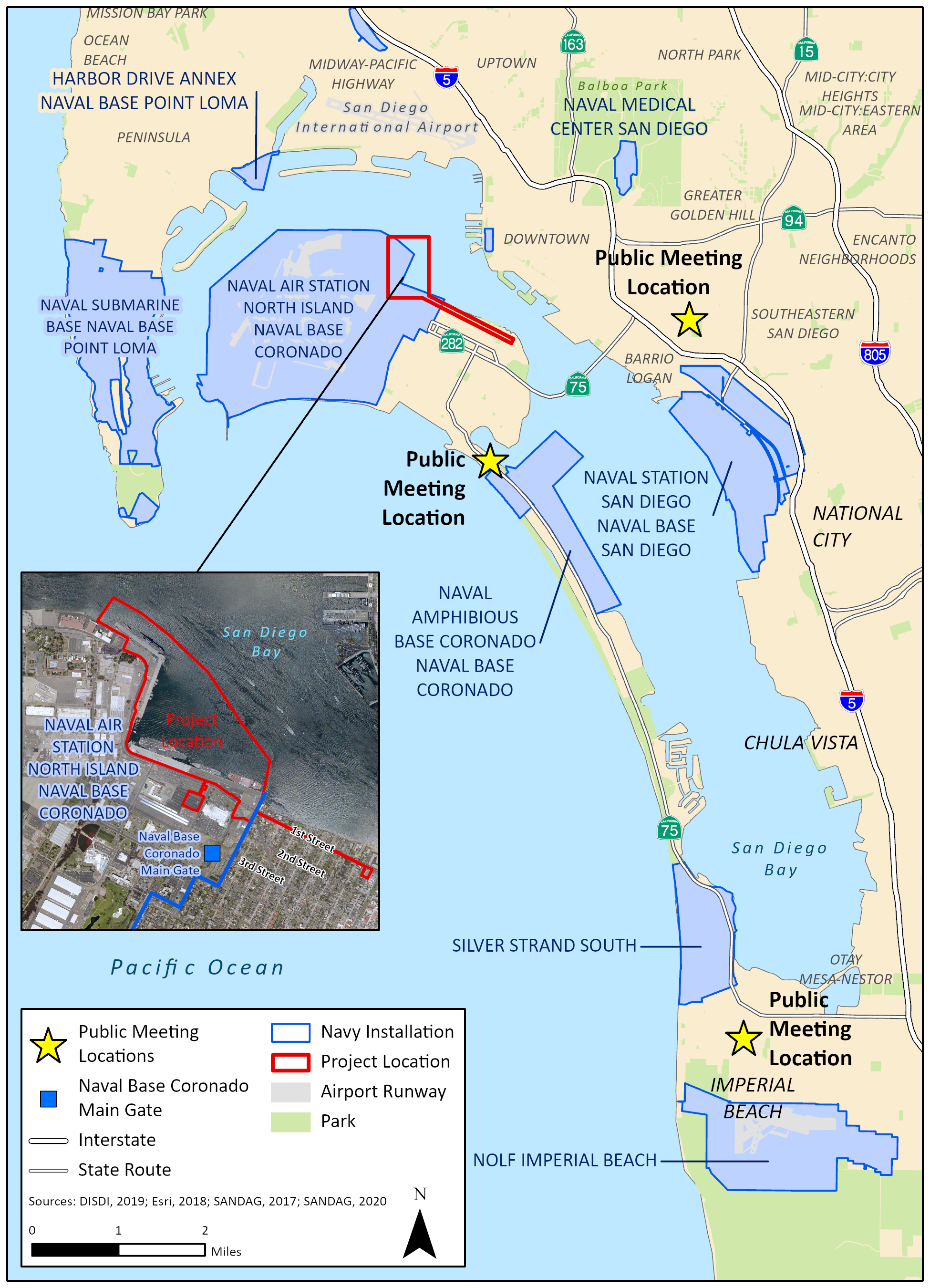
Anyway. Here's a preschool right next to a military base, it took me about 3 minutes of scrolling around on google maps to find this.
This is incredibly misleading. It's not like there's a bunch of metallic sodium sitting in the battery waiting to react. It's a lot closer to a solid solution. Do you have a personal injury lawyer on speed dial for your table salt?
Your response is even more misleading than the misconception you're trying to correct. The complexes formed in (charged) lithium batteries are unstable and reactive in ways quite similar to the base metal. The salt molecule, in contrast, is pretty unreactive. Salt shakers don't catch fire if dropped.
The substances similar with Prussian blue are very stable. During charge and discharge, the ionic charge of iron ions varies between +2 and +3 and the structure of the electrode has spaces that are empty when the charge of the iron ions is +3 and they are filled with sodium ions when the charge of the iron ions is +2.
Both states of the electrode are very stable, being neutral salts. The composition of the electrolyte does not vary depending on the state of charge of the battery and it is also stable.
The only part of the battery that can be unstable is the other electrode, which stores neutral atoms of sodium intercalated in some porous material. If you take a fully charged battery, you cut it and you extract the electrode with sodium atoms, that electrode would react with water, but at a lower speed than pure sodium, so it is not clear how dangerous such an electrode would be in comparison with the similar lithium electrodes.
Fine, now show a video of what happens if you pierce the Na-ion cell with something metallic. Because explosion doesn't even begin to cover what happens next in that situation. And you are suggesting that everyone should be 2 ft from such a cell, traveling at 60 mph, in all weather conditions. These things should be restricted to grid stabilization batteries and nothing else and you know it. Don't mislead people on such things.
Piercing a Na-ion cell is not good, but the effect is pretty much the same like piercing a Li-ion cell.
In both cells the electrode that stores alkaline metal atoms has high reactivity, but in both cases the reactivity is much smaller than for a compact piece of metal, so the reaction with substances like water would proceed much more slowly than in the movies when someone throws an alkaline metal in water.
If you pierce the cell, but the electrode does not come in contact with something like water or like your hand, nothing much happens, the air would oxidize the metal, but that cannot lead to explosions or other violent reactions.
The electrolyte of lithium-ion batteries is an organic solvent that is very easily flammable if you pierce the battery. The electrolyte of sodium-ion batteries is likely to be water-based, which is safer, because such an electrolyte is not flammable. It would be caustic, but the same is true for any alkaline or acid battery, which have already been used for a couple of centuries without problems.
Overall, sodium-ion batteries should be safer than lithium-ion batteries, so safety is certainly something that cannot be hold against them.
Over the last couple of years I've realized how shitty and tiring it is to do anything at all on the computer. Reading something like Reddit was tiring before, because of spam, submarine advertising, etc. But it was still worth it because the signal to noise ratio was still there. Now? No way. Easily 50% of comments are AI generated.
I used to have this idea that if I built something cool it would be valuable to donate it to the world for free. But now increasingly I'd be just making a donation to the training data, and on top of this I'm in competition with AI slop. Most people won't tell the difference and won't care. The noise floor for doing absolutely anything collaboratively on the computer is now 10x higher than it was before, and I'm basically checked out at this point. Even HN is becoming tiring to read since I think around 10-15% of comments that I read are AI generated. When that number reaches 30% I'm done forever, gone. My life is too short to waste time on this shit.


reply