This piece of software has been my goto on transcribing music for all of the instruments I play for the past 25 years. I can't recommend it enough. It has been pivotal in me being a better musician. Works on Linux, Mac and Windows.
I've also been using transcribe for over a decade and can vouch for how great it is for learning music and transcribing by ear. Irreplacable for my workflow.
Very personal counterpoint: I find Stross writing extremely bland, contrived, and badly paced.
I really really disliked Accelerando in particular, finding it completely vacuous, the sciencey namedrops is self-aggrandising and sound like attempts at reader flattery, the entire plot is telegraphed, characters are generic and perfectly forgettable.
It was several friends recommendation and I only got reading through the whole ordeal because whenever I asked "well I'm about there and it doesn't click" they answered "no spoiler, just a dozen pages and you'll see!"
Not a critic, again this is my personal experience of it. If people enjoyed it, more power to them.
Not LaTeX. Flux has its own grammar. It tokenizes Unicode math symbols like ² directly into AST nodes.
The shell doesn't talk to the LLM directly. They're separate processes. Alexitha monitors system state via cgroup events and adjusts scheduler weights. Flux is just the user-facing shell. They're connected through Tenet (the scheduler), not through a direct pipe.
Yes, the LLM is swappable. Alexitha is currently a fine-tuned 7B model, but the interface is not model specific. Any model that can read a cgroup event stream and output a scheduling decision can be slot in. I'm planning to test with smaller models (1-3B) to reduce boot overhead.
How easy do you find Unicode input? Isn't "x^2" or "x**2" (Python) much easier to type than "x²" ? In the latter case, I have to lookup the char code for ², which happens to be U+0082 ("Superscript two")
Gardiner's sign list. It's a modern categorization and ordering scheme. "Man and his occupations", "Woman and her occupations", "Anthropomorphic deities", "Parts of the human body", "Mammals", "Parts of Mammals", so on and so forth.
This also makes me think of drumming. There are the sticks that hit the surface and form a pattern of sounds. Lots of different kinds of spaces embedded there!
So how the heck does the change in TOS work for the processing.org environment? That was an IDE that wraps around Java and a bunch of libraries. Arduino came along and borrowed the processing IDE put in an older gcc crosscompiler for the fleet of Arduino chips. They are the same IDEs but with different backends. If you can't reverse engineer the Arduino IDE, it was already borrowed from the processing people and open sourced. So are the processing people in danger of TOS violation? Or is it the reverse?
This is one of those books that I read in the 80s that helped me change career directions to be a programmer in Silicon Valley and eventually get a PhD and teach programming at the university level.
It is one of the most mind boggling thing to me how many animal species can survive with such convoluted life cycles. Fish do find their way into weird places. I've heard that fish egg stick to waterfowl feet.
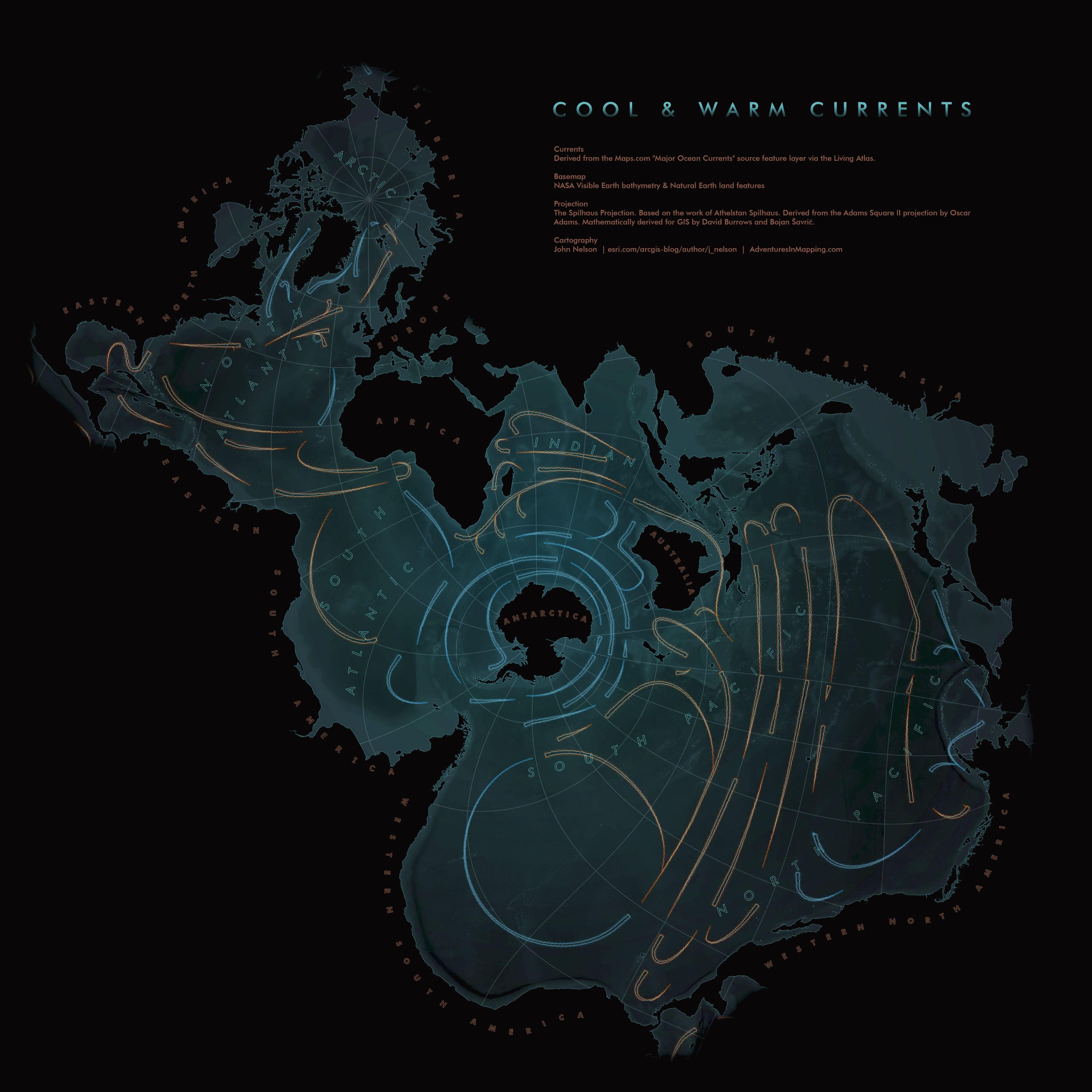
Not to mention that no fish would have any insight into at least whatever is within visible distance from the shore surface. An accurate version of such a map would highlight an interesting perspective of how humans also lack the ability to perceive, comprehend, or even accept things they either physically or psychologically cannot perceive or do not wish to perceive and accept it.


https://www.seventhstring.com/xscribe/overview.html
reply